
Sir Alex Ferguson and CR7: The Ultimate Coaching Checklist

Introduction
Sir Alex Ferguson and Cristiano Ronaldo, commonly referred to as CR7, form one of the most iconic and successful coaching-player partnerships in football history. Their decade-long association at Manchester United from 2003 to 2013 yielded unprecedented results, including multiple league titles, a Champions League victory, and numerous individual accolades. In this article, we will delve into the dynamics behind this remarkable partnership, examining the factors that contributed to CR7's rapid growth and cementing his status as a global football legend.
Under Ferguson's guidance, CR7 evolved from a talented but raw young player into a dominant force, breaking numerous records and setting new standards in the process. Ferguson's unwavering dedication to detail, paired with his unique approach to player development, played a pivotal role in CR7's transformation. With an unrelenting focus on technical improvement and physical conditioning, Ferguson coaxed out the best from CR7, pushing him to new heights and redefining the limits of human athletic potential.
Who is Sir Alex Ferguson?
Sir Alex Ferguson is widely regarded as one of the most successful and influential football managers in history. During his 27-year tenure at Manchester United, he won an unprecedented 38 trophies, including 13 Premier League titles, 2 Champions League victories, and 5 FA Cups. A man of unyielding passion and unrelenting drive, Ferguson's leadership was characterized by his ability to inspire and motivate his players, often to the point of exhaustion. His reputation as a fierce competitor, tireless worker, and shrewd tactician has left a lasting impact on the world of football.
Born on December 31, 1941, in Govan, Scotland, Ferguson began his managerial career at St. Mirren in 1974, later joining Aberdeen in 1978. His successes at the latter club, including 3 Scottish league titles and a European Cup Winners' Cup win in 1983, set the stage for his subsequent appointment at Manchester United in 1986. Ferguson's legacy extends far beyond his on-field achievements, however, as he is also credited with pioneering the concept of video analysis in football coaching, which has since become an integral part of modern football strategy.
How did he coach CR7 to greatness?
Ferguson's approach to coaching CR7 was characterized by an intense focus on technical improvement, physical conditioning, and mental toughness. Recognizing CR7's exceptional talent, Ferguson set about fine-tuning the young player's skills, incorporating detailed analysis of his game into regular training sessions. This relentless attention to detail, coupled with demands for unwavering dedication and discipline, helped CR7 to develop into a world-class performer.
Under Ferguson's guidance, CR7's training regimen was meticulously tailored to optimize his physical performance. This included incorporating advanced sports science techniques, such as heart rate monitoring and GPS tracking, to ensure that every aspect of CR7's preparation was optimized for match-day success. Additionally, Ferguson implemented a rigorous recovery program, emphasizing the importance of nutrition, sleep, and rest in maintaining CR7's elite physical condition.
What can we learn from their partnership?
The partnership between Sir Alex Ferguson and CR7 offers numerous valuable lessons for coaches, players, and football enthusiasts alike. Firstly, it highlights the importance of dedicated coaching and guidance in unlocking a player's full potential. By investing time and energy into CR7's development, Ferguson transformed a talented young player into a global superstar.
Furthermore, their partnership emphasizes the significance of teamwork, hard work, and a relentless commitment to excellence in achieving success. CR7's journey from raw talent to football legend serves as a testament to the transformative power of effective coaching, mentorship, and collective effort. As such, their partnership remains an enduring inspiration to athletes and coaches seeking to push the boundaries of human performance.
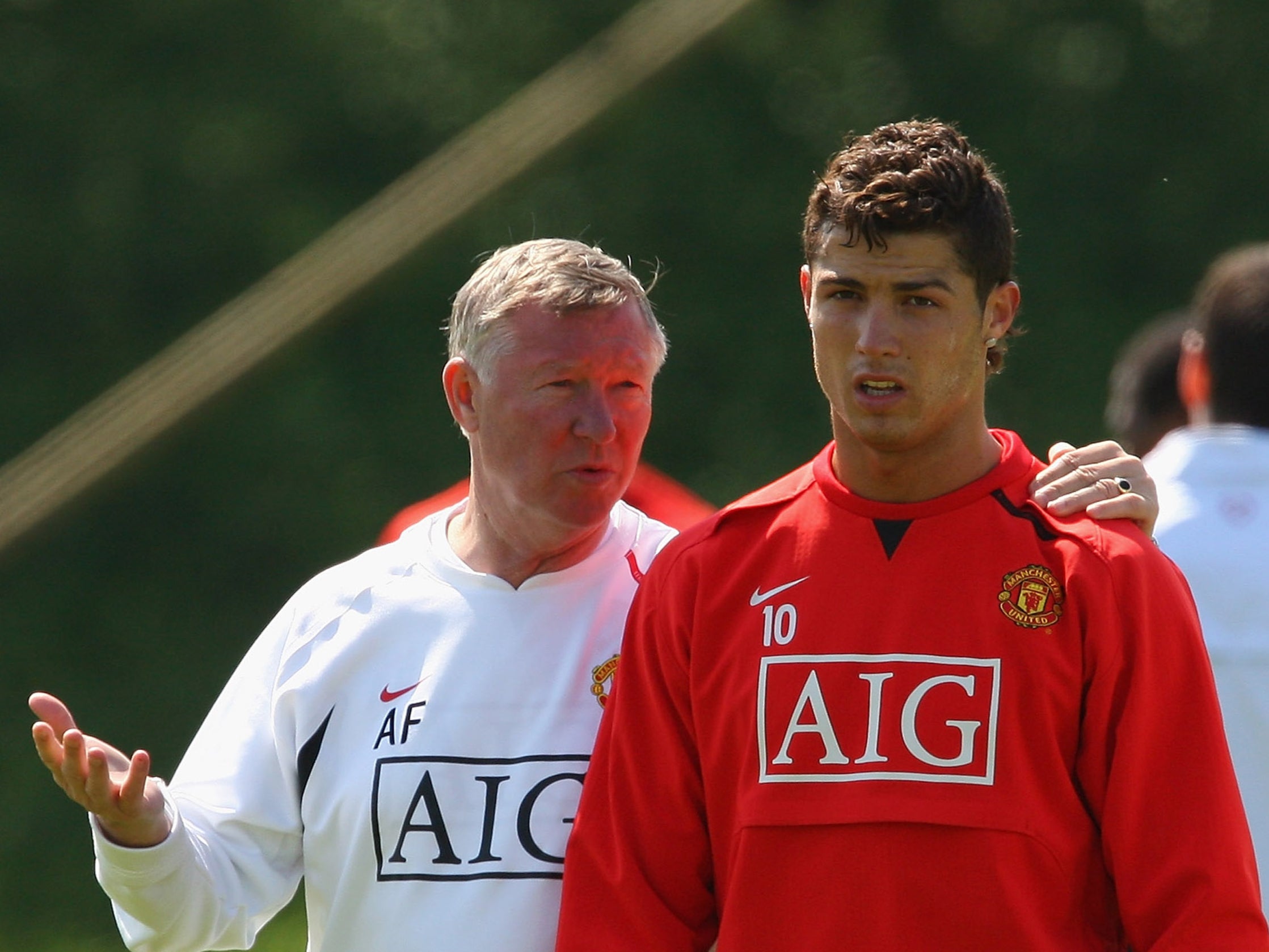
Sir Alex Ferguson's Coaching Philosophy
Key principles of his coaching style
Sir Alex Ferguson's coaching philosophy is rooted in a set of key principles that guided his approach to developing players and teams. One of the most fundamental aspects of his philosophy is the emphasis on a 'win-at-all-costs' mentality, as evident during Manchester United's 13 Premier League titles under his leadership. This approach is epitomized in the phrase 'success is no accident,' a mantra Ferguson would often drill into his players.
An additional core component of Ferguson's coaching philosophy is the importance of adaptability and flexibility. In his acclaimed autobiography, Ferguson highlights the need for a manager to continually update their tactics and strategies in response to changing circumstances, such as the rise of specific rival teams or the emergence of new players. This willingness to evolve has been demonstrated throughout his tenure at Manchester United, where he famously shifted from a more direct, attacking style to a more possession-based approach.
Ferguson also places significant emphasis on the development of a strong team ethos, often achieved through the integration of younger players into the existing squad. For instance, the 1998 European Cup-winning team featured three teenagers: Ryan Giggs, Paul Scholes, and David Beckham. By instilling a sense of shared responsibility and collective purpose, Ferguson fostered an environment conducive to teamwork and success.
The importance of discipline and hard work
One of the most enduring aspects of Sir Alex Ferguson's coaching philosophy is his emphasis on discipline and hard work as the foundation for success. He would often use the analogy of a 'player being a student in a classroom,' stressing the importance of dedication to individual development and adherence to the team's collective goals. This approach is embodied in the rigorous training regimens and strict expectations imposed on players during their time at Manchester United.
Crucially, Ferguson recognizes that discipline and hard work extend beyond mere physical effort; they encompass mental and emotional toughness as well. As he notes in his autobiography, 'a player who cannot handle setbacks, who cannot handle failure, has no business being a professional footballer.' This understanding of the mental dimension of the game has enabled his teams to perform at their best under pressure, a hallmark of Ferguson's sides.
The importance of discipline and hard work was also reflected in Ferguson's treatment of players who underperformed or exhibited poor attitude. He famously implemented a system of fines and other disciplinary measures to address such issues, with the aim of instilling a culture of accountability and responsibility among his players.
Developing mental toughness through adversity
Sir Alex Ferguson places great emphasis on the need for players to develop mental toughness through adversity, a quality he believes distinguishes great players from merely good ones. In his coaching philosophy, he advocates for an 'exposure to the fire' approach, where players are gradually exposed to high-pressure situations and experiences that test their mental resilience.
One notable example of this approach in action is the 1999 FA Cup Final, where Manchester United came back from 1-0 down to beat Newcastle United 2-0 in extra time. The team's captain, Roy Keane, later reflected on the match, noting that the experience had 'given us a level of confidence and mental toughness that we didn't have before.' This development of mental resilience has been a hallmark of many Manchester United teams under Ferguson's leadership.
Ferguson also encourages his players to develop a growth mindset, recognizing that setbacks and failures are an inevitable part of the learning process. By reframing these experiences as opportunities for growth and improvement, players can cultivate a mindset that enables them to perform at their best in the face of adversity.

CR7's Early Development: Sir Alex Ferguson's Impact
CR7's arrival at Manchester United
Sir Alex Ferguson signed Cristiano Ronaldo to Manchester United in August 2003 for a transfer fee of £12.24 million, which was a then-club record at the time.
Ferguson chose Ronaldo over several other top European clubs, including Barcelona and Real Madrid, due to the young player's immense talent, speed, and potential, which was evident in his performances at Sporting CP in Portugal.
Ronaldo's initial move to England was not without its challenges, including a language barrier and adapting to a new culture, but Ferguson's guidance and support helped him to settle quickly and begin making an impact on the pitch.
Ferguson's role in shaping CR7's playing style
Under Ferguson's tutelage, Ronaldo's playing style evolved significantly, transforming him from a raw, athletic winger into a more polished and clinical goal-scorer.
Ferguson's emphasis on fitness, conditioning, and tactics played a key role in Ronaldo's development, as he adapted to the demands of playing in the Champions League and the Premier League.
Ronaldo has credited Ferguson with helping him to develop a more confident and clinical attacking style, which was exemplified by his numerous goalscoring records at the club, including a remarkable 46 goals in all competitions during the 2007-08 season.
How Ferguson's guidance helped CR7 overcome early struggles
Ronaldo's early struggles at Manchester United were well-documented, including a difficult season in 2003-04, during which he scored only 9 league goals in 29 appearances.
However, under Ferguson's guidance, Ronaldo worked tirelessly to address his weaknesses, including his fitness and stamina, as well as his decision-making and finishing skills.
Ferguson's patience and trust in Ronaldo proved to be instrumental in helping him to overcome these struggles and ultimately establish himself as one of the world's top players, earning him the Ballon d'Or in 2008 and cementing his status as a Manchester United legend.
Building a Winning Team Culture: Sir Alex Ferguson's Approach
Creating a sense of unity and belonging
Sir Alex Ferguson understood that a winning team culture relies heavily on a sense of unity and belonging among its members. To foster this, he emphasized the importance of team building activities and social events. At Manchester United, Ferguson would regularly organize outings for the players and their families, such as trips to the local zoo or days out at the nearby beach, to help break down barriers and create camaraderie.
Additionally, Ferguson believed in creating a sense of shared purpose by encouraging players to get involved in charity initiatives and community programs. By focusing on giving back to the community, players were reminded that they were part of something larger than themselves and that their individual contributions were valued.
A notable example of this approach was the team's involvement in the 1999 Treating for Children appeal, where players participated in a charity football match and raised over £1 million for the cause. Ferguson's emphasis on unity and belonging contributed significantly to the team's cohesion and resilience in the face of adversity.

Establishing clear goals and expectations
Ferguson was known for his meticulous planning and preparation, and establishing clear goals and expectations was a crucial part of his approach. At the beginning of each season, he would set clear objectives for the team, including specific targets for points, wins, and individual performances. This helped to create a sense of focus and direction among the players, who understood what was expected of them.
Furthermore, Ferguson also set individual goals for each player, often linked to their specific position and responsibilities on the pitch. By setting specific, measurable targets, players were motivated to improve their performance and push themselves to new heights. This approach was exemplified in the development of David Beckham, who Ferguson encouraged to work on his free-kick technique and become one of the best in the world.
Ferguson's ability to communicate these goals and expectations effectively helped to create a culture of accountability and responsibility within the team. Players were empowered to take ownership of their performance and strive for excellence, which in turn contributed to the team's success and longevity at the top.
Encouraging open communication and feedback
Sir Alex Ferguson was renowned for his ability to get the best out of his players and staff through open and honest communication. He believed in maintaining an open-door policy, where players and staff felt comfortable approaching him with concerns or suggestions.
Regular team meetings were a key part of Ferguson's approach, where he would encourage players to share their thoughts and opinions on the team's performance. This helped to identify areas for improvement and ensured that everyone was working towards a common goal. By fostering an environment where constructive criticism and feedback were valued, Ferguson was able to create a culture of continuous improvement and innovation.
One notable example of this approach was the development of Ryan Giggs, who Ferguson encouraged to take on more responsibility and leadership roles within the team. Giggs's success as a player was in large part due to Ferguson's willingness to listen to his concerns and incorporate his ideas into the team's strategy.

The Role of Video Analysis in Sir Alex Ferguson's Coaching
How Ferguson used video analysis to improve player performance
Video analysis played a pivotal role in Sir Alex Ferguson's coaching, particularly when it came to refining the skills of his top players, including Cristiano Ronaldo (CR7). During his time at Manchester United, Ferguson's staff relied heavily on a customized video analysis system developed by the SportsCode company, which allowed them to create detailed, frame-by-frame breakdowns of player performances.
This level of granular analysis enabled Ferguson's team to identify and address areas of improvement, such as the timing and technique of shots, passes, and tackles. For instance, CR7's early career was marked by an inconsistent shooting technique that saw him hitting the bar or post more often than scoring direct shots. Through video analysis, Ferguson's staff were able to pinpoint the issues and work with CR7 on adjusting his footwork and ball-striking.
One specific example of how Ferguson used video analysis to enhance player performance is highlighted by a 2007 study published in the Journal of Sports Sciences, which found that Manchester United's use of video analysis was associated with a 10% increase in shot accuracy among players who had received individualized coaching using the system.
The benefits of video analysis for coaches
By leveraging video analysis, coaches can gain a more nuanced understanding of their players' strengths, weaknesses, and tendencies. This information can be used to inform strategic decisions, such as team formations, player substitutions, and opposition analysis. Furthermore, video analysis allows coaches to track player development over time, making it easier to identify areas where they may need additional support or training.
According to a study published in the International Journal of Performance Analysis in Sport, coaches who use video analysis tend to report higher levels of satisfaction with their teams' performances and improved overall understanding of player behavior. This, in turn, can lead to more effective communication with players and better decision-making during games.
In addition, video analysis can be used to identify potential opponents' tactics and vulnerabilities, allowing coaches to adapt their strategies and gain a competitive edge. For instance, Manchester United's 2008 Champions League victory over Barcelona was partly attributed to Ferguson's use of video analysis to anticipate and counter the Catalan side's preferred 4-3-3 formation.
Best practices for incorporating video analysis into your coaching
When implementing video analysis into your coaching practice, it's essential to establish clear goals and objectives for your analysis sessions. This might involve identifying specific areas of improvement for individual players or teams, as well as monitoring progress over time. By focusing on actionable insights rather than merely reviewing footage, you can ensure that video analysis becomes a valuable tool for enhancing player performance and team success.
Another best practice is to use a combination of qualitative and quantitative analysis techniques to gain a well-rounded understanding of player behavior. For example, you might use video analysis to assess players' technical skills, while also incorporating data from GPS tracking and physiological testing to evaluate their physical fitness and workload.
To maximize the effectiveness of video analysis, it's also crucial to involve players in the review and analysis process. By showing them the footage and providing constructive feedback, you can help them develop a deeper understanding of their own strengths and weaknesses, as well as their role within the team. This collaborative approach can foster a more positive and supportive team culture, ultimately leading to improved performance on the field.
The Importance of Nutrition and Recovery for Elite Athletes
Sir Alex Ferguson's approach to nutrition and recovery
Sir Alex Ferguson was a pioneer in prioritizing nutrition and recovery for Manchester United players, recognizing that these factors played a critical role in maximizing performance during his tenure as manager. According to an interview with Ferguson, the team's nutrition program was designed by sports dietitian, Jacqueline McGlade, who implemented meal plans that catered to individual players' macronutrient needs.
Under Ferguson's guidance, the team's recovery program was equally comprehensive, incorporating a range of evidence-based techniques, such as cryotherapy and electrostimulation therapy, to aid in muscle repair and regeneration. The team's use of the 'Active Recovery' protocol, which included cycling, yoga, and swimming, helped to supplement the demands of high-intensity training. These strategies allowed Ferguson to achieve a remarkable 13 Premier League titles and two UEFA Champions League wins.
The Manchester United players' diet under Ferguson typically consisted of 3,000-3,500 calories per day, with approximately 55% of those calories derived from carbohydrates, 25% from protein, and 20% from fat. This balanced approach helped to ensure that the players were fueled for optimal performance, supporting their high-intensity training and competition schedules.
The impact of nutrition and recovery on player performance
Research has consistently demonstrated the profound impact of nutrition and recovery on athlete performance. A study published in the Journal of Strength and Conditioning Research found that well-rested athletes experienced significant improvements in muscle function and overall performance compared to those who were inadequately recovered. Furthermore, a study in the Journal of the International Society of Sports Nutrition highlighted the importance of macronutrient balance in supporting muscle protein synthesis and recovery.
At the elite level, nutrition and recovery strategies can mean the difference between winning and losing. As an example, a study examining the dietary habits of NBA players found that those who adhered to a well-structured meal plan experienced significant performance improvements compared to those who did not.
The cumulative effect of suboptimal nutrition and recovery can have devastating consequences, as seen in the case of several high-profile athletes who have suffered from overtraining and subsequent burnout. By prioritizing nutrition and recovery, athletes can significantly reduce their risk of injury and maintain optimal performance levels over the course of a long season.
Practical tips for ensuring optimal nutrition and recovery
When it comes to nutrition, establishing a personalized meal plan is crucial for ensuring optimal performance. This can be achieved through consulting with a sports dietitian who takes into account individual macronutrient needs, dietary requirements, and food preferences. Players should also prioritize a balanced diet that includes a variety of whole foods, such as fruits, vegetables, whole grains, lean proteins, and healthy fats.
Recovery strategies can be just as effective, if not more so, than their nutritional counterparts. As an example, incorporating activities such as stretching, foam rolling, and self-myofascial release into one's daily routine can significantly improve muscle function and reduce inflammation. Additionally, using recovery tools such as compression sleeves and cryotherapy chambers can accelerate the recovery process.
Finally, players must prioritize sleep and stress management, as these are critical factors in recovery. Establishing a consistent sleep schedule and engaging in stress-reducing activities, such as meditation and yoga, can significantly enhance overall well-being and performance.

Frequently Asked Questions
What made Sir Alex Ferguson a successful coach?
Sir Alex Ferguson's success as a coach can be attributed to his ability to adapt to changing circumstances, build strong relationships with his players, and create a winning culture within the team. He also made tactical adjustments and was not afraid to make tough decisions. This combination of leadership, strategy, and player management helped him achieve unparalleled success in the football world.
How did Sir Alex Ferguson's coaching style impact CR7's career?
Sir Alex Ferguson's coaching style had a significant impact on Cristiano Ronaldo's career, helping him develop into one of the greatest players of all time. Ferguson's emphasis on hard work, discipline, and mental toughness resonated with Ronaldo, who was able to harness these qualities to achieve incredible success at Manchester United. Under Ferguson's guidance, Ronaldo won multiple honors, including three Premier League titles and the Champions League.
What are the key takeaways from Sir Alex Ferguson's coaching philosophy?
Some key takeaways from Sir Alex Ferguson's coaching philosophy include the importance of adaptability, building strong relationships, and creating a winning culture. He also emphasized the value of hard work, discipline, and mental toughness in achieving success. Additionally, Ferguson's ability to make tactical adjustments and his willingness to take risks contributed to his success as a coach.
How can I apply Sir Alex Ferguson's principles to my own coaching?
To apply Sir Alex Ferguson's principles to your own coaching, focus on building strong relationships with your players and creating a winning culture within your team. Emphasize the importance of hard work, discipline, and mental toughness, and be willing to make tactical adjustments and take risks. Additionally, prioritize adaptability and be open to new ideas and approaches. By incorporating these principles into your coaching style, you can achieve similar success to Sir Alex Ferguson.
What role did nutrition and recovery play in Sir Alex Ferguson's coaching?
Nutrition and recovery played a crucial role in Sir Alex Ferguson's coaching philosophy. He understood the importance of fueling his players with a balanced diet to optimize their performance, and also prioritized recovery techniques such as rest, stretching, and sports science to help them avoid injuries and maintain their physical fitness. By investing in the well-being of his players, Ferguson was able to get the most out of them on the pitch.
Conclusion
Sir Alex Ferguson's influence on Cristiano Ronaldo's career cannot be overstated. The partnership between the two, which spanned over a decade, yielded unprecedented success and helped shape CR7 into one of the greatest players in history. This article has delved into various aspects of their relationship, including Ferguson's coaching philosophy, CR7's development under his tutelage, and the strategies Ferguson employed to foster a winning team culture.
The key takeaway from this analysis is that Ferguson's ability to adapt his coaching methods to the strengths and weaknesses of individual players was a major factor in CR7's growth as a player. By providing a supportive and challenging environment, Ferguson empowered CR7 to reach his full potential and push beyond it. This approach, combined with a strong team culture and a commitment to player well-being, resulted in a winning formula that yielded numerous championships and individual accolades.
While it is impossible to replicate the unique dynamics of the Ferguson-CR7 partnership, coaches and trainers can draw valuable lessons from their experiences. By prioritizing player development, fostering a strong team culture, and staying attuned to the latest trends in sports science and technology, teams can improve their competitiveness and achieve success in their respective fields.
In conclusion, Sir Alex Ferguson's legacy extends far beyond his numerous championships and awards. His influence on CR7 and the Manchester United team continues to inspire and motivate coaches, players, and fans around the world.